
.png)
Earth
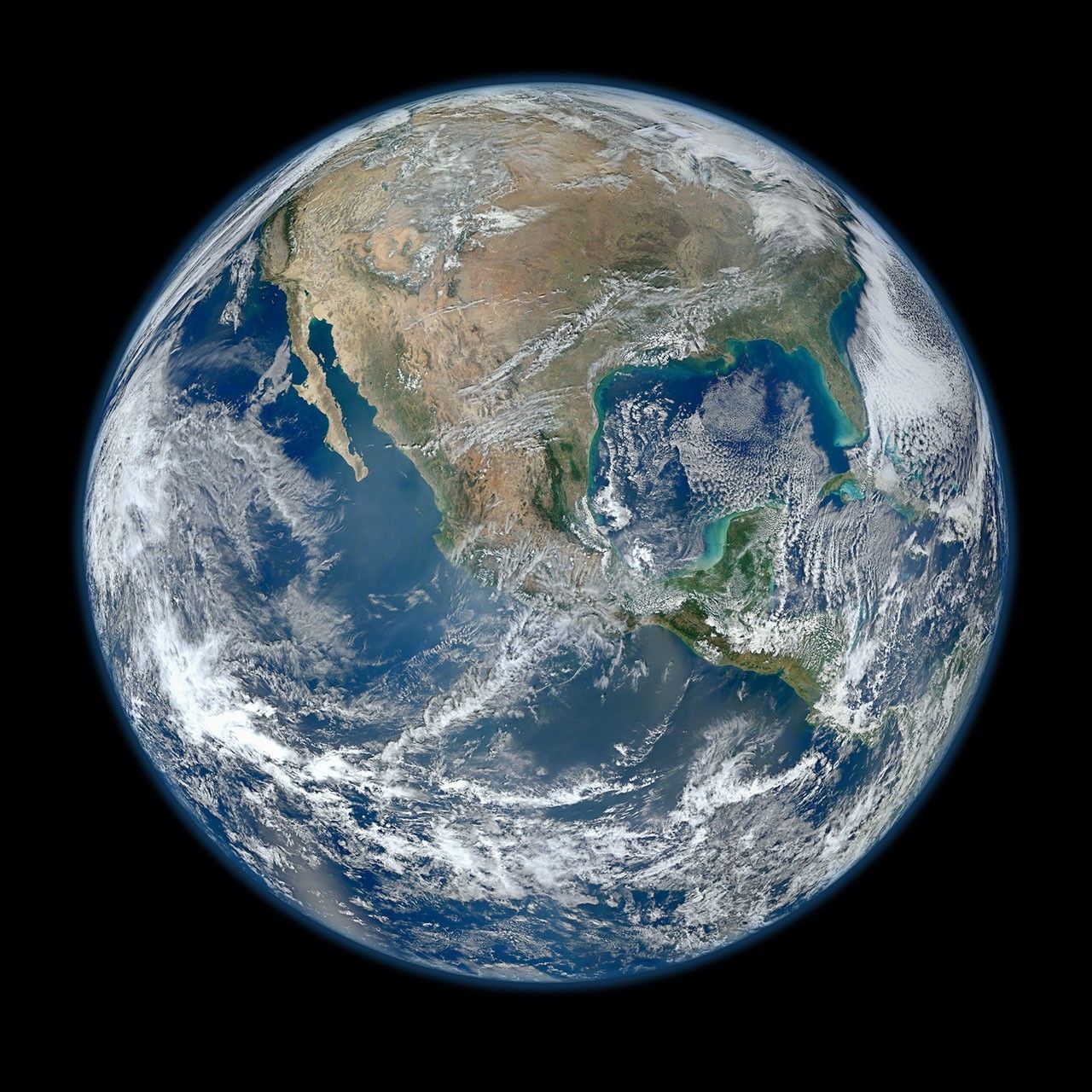
Our ocean-covered home and the only world known to host life.
Quick facts
Object type: Terrestrial planet
Average distance from Sun: 1 AU; 149,600,000 km; 92,957,130 miles
Distance note: Average orbital distance (semimajor axis), not the planet’s changing distance from Earth.
Diameter: 12,756 km; 7,926 miles
Diameter note: Equatorial diameter; approximate and rounded.
Known moons: 1
Moon count last verified: 2026-10-03
About this count: Known natural satellites; counts change when discoveries are confirmed.
Year: About 365.25 Earth days
Rotation: About 23 hours 56 minutes
Solar day: 24 hours on average
Surface gravity: 9.8 m/s²
Gravity note: Approximate equatorial surface acceleration including rotation; values are rounded.
Temperature: Global average surface temperature about 15 °C (59 °F), with large regional and seasonal variation.
Atmosphere / composition: Rocky planet; atmosphere mainly nitrogen and oxygen.
Rings: No known rings.
Remember this
Sunlight takes about eight minutes to reach Earth.
Explore this world
Earth is our reference point for the walk. An astronomical unit describes the Earth–Sun distance scale. Liquid oceans, an atmosphere and a living biosphere make this world distinctive among the planets we have studied.
What makes it distinctive
Earth’s tilted axis produces seasons. Its rotation relative to the stars takes slightly less than a 24-hour solar day.
Exploration
Spacecraft views reveal Earth as a connected system of oceans, land, clouds and ice.
Mission updates
NASA’s Earth Science missions monitor changes across our atmosphere, oceans and land. Follow the Earth Science source for current research.
Mission information last verified: 2026-10-03
Image credit
NASA
View the original image and its context
Sources and further reading
NASA science and mission reference
NASA science and mission reference
Science last verified: 2026-10-03
This permanent Solar System guide accompanies reusable AstroTours Planet Walk flags. Discovery continues, so online information can change while your flag's QR address stays the same.